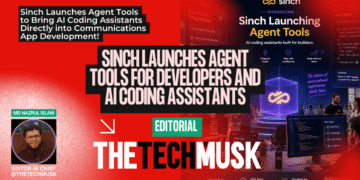







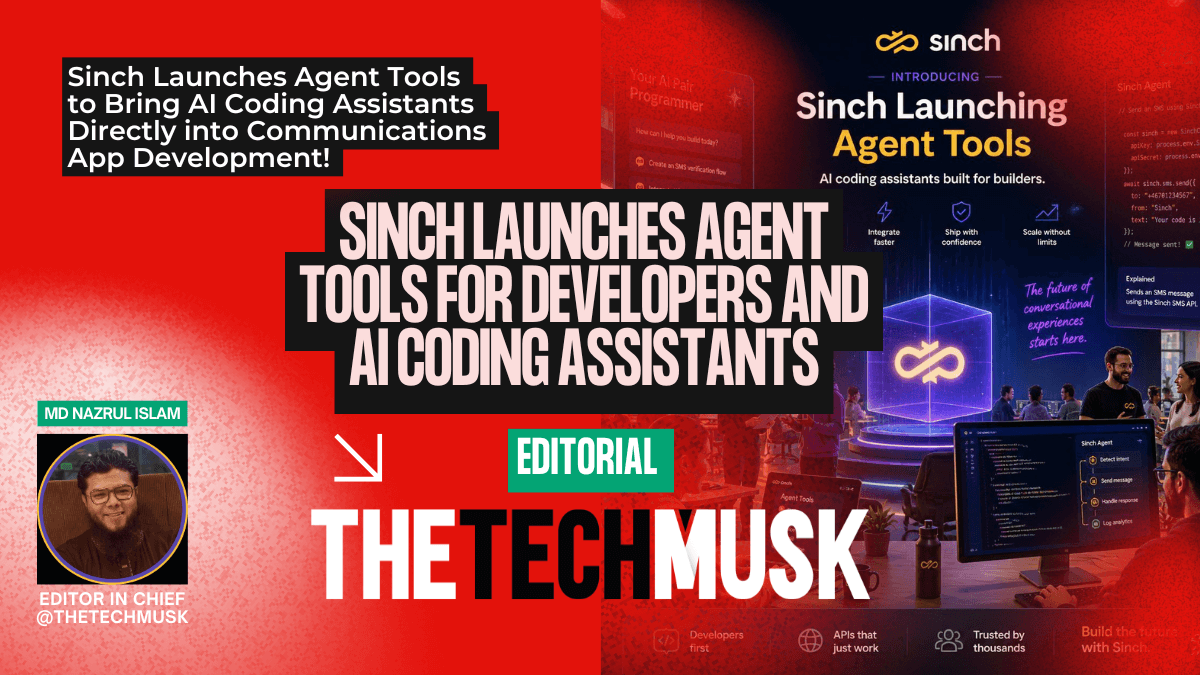
STOCKHOLM, Sweden — As AI-assisted software development reshapes how applications are built, Sinch is introducing a new toolkit designed to bring its communications platform directly into developers’ coding environments.
The company on Monday announced Agent Tools, a suite of integrations that enables developers to build, test, and deploy applications using Sinch’s communications infrastructure without leaving their preferred integrated development environments (IDEs) or AI coding assistants.
The launch reflects a broader shift in software engineering, where developers increasingly rely on large language model (LLM)-powered assistants to write, review, and debug code inside their existing workflows.
Building where developers already work
Rather than requiring developers to switch between documentation portals, browser tabs, and developer dashboards, Agent Tools embeds Sinch’s APIs and platform resources directly into supported IDEs.
The toolkit includes extensions for Visual Studio Code, JetBrains IDEs, and other Open VSX-compatible editors, alongside integrations with AI coding assistants including Claude Code, Cursor, GitHub Copilot, and ChatGPT Desktop.
“AI-assisted development tools are becoming a larger part of how software is built,” said David Kårfors, Vice President of Product Management & Product Platform at Sinch.
“With Agent Tools, we are bringing Sinch into those workflows so developers can build and test applications, access accurate platform information and work with AI-assisted development tools without leaving the environments they already use.”
Simulator Mode lowers the barrier for new developers
Among the platform’s new capabilities is Simulator Mode, which allows developers to experiment with Sinch integrations before creating an account or making live API calls.

Traditionally, developers evaluating a communications platform must first register an account, configure credentials, and navigate documentation before writing code.
Sinch says Simulator Mode removes much of that initial setup, enabling developers to validate integrations directly within their development environment.
According to Kårfors, the feature is intended to make it easier for developers to evaluate the platform before committing to production use.
AI assistants gain direct API access
The launch also introduces an MCP (Model Context Protocol) server, allowing AI coding assistants to access live Sinch API definitions.
Combined with Sinch Skills, which provides structured implementation guidance and product knowledge, the integrations aim to improve the accuracy of AI-generated code and reduce hallucinated API usage.
The tools support multiple Sinch services, including:
- Conversation API
- Authentication
- Voice
- Verification
- Numbers
- Elastic SIP Trunking
- Fax
- Mailgun
Why it matters
As AI coding assistants become mainstream, software vendors are increasingly adapting their platforms for agentic development workflows rather than traditional documentation-first experiences.
Instead of treating AI as an external coding aid, companies are beginning to expose structured APIs, implementation guides, and live platform data directly to AI agents.
For communications platform providers like Sinch, that shift could reduce developer onboarding friction while making it easier to build messaging, voice, authentication, and customer engagement features inside AI-assisted development environments.
Agent Tools is available globally as part of Sinch’s broader developer platform, which also includes SDKs, command-line tools, and automation capabilities.