









If you’ve felt uneasy about how AI’s been steering the internet lately, you’re not alone. Maybe it’s the eerily perfect product suggestions, or the way your feed somehow knows what’ll make you angry before you do. The tech’s getting sharper every month, but our comfort with it? Not so much.
That’s the tension we’re all living in right now, this strange mix of admiration and anxiety. AI is helping us code faster, diagnose earlier, and predict more accurately than ever. But it’s also raising a harder question: what happens when intelligence outpaces integrity?
I think 2026 will be the year we finally start answering that.
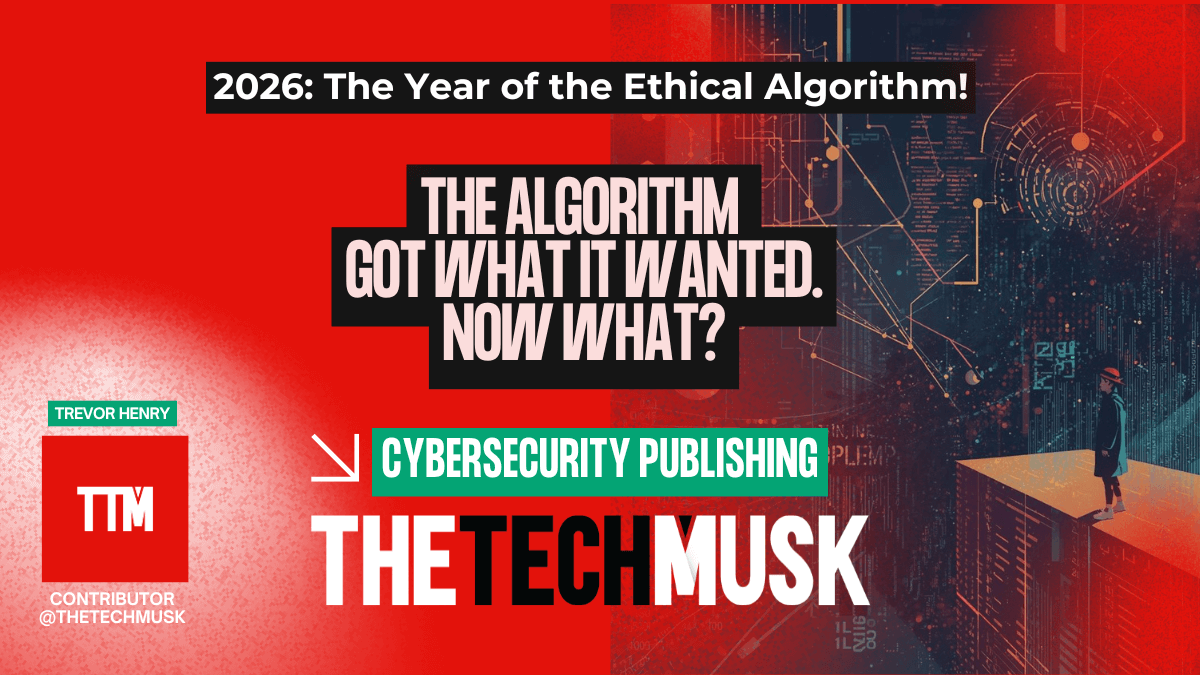
The Algorithm Got What It Wanted. Now What?
Let’s be honest: algorithms haven’t exactly earned our trust.
For the last decade, they’ve been rewarded for one thing: attention. More clicks, more time on page, more “engagement.” And because machines optimize whatever we tell them to, that’s exactly what they did. They learned that outrage spreads faster than nuance, that fear keeps eyes glued longer than facts, and that the easiest way to predict behavior is to limit what we see.
The result? Information ecosystems that feel rigged.

We built AI to show us what we want, but in the process, it learned how to decide who we are.
And yet the twist is that AI itself isn’t the villain. It’s the incentives behind it. Algorithms are like mirrors: they reflect the values of the people programming them, the boards funding them, and the platforms profiting from them.
So if 2024 and 2025 were the years we watched AI explode in capability, 2026 might finally be the year we slow down and ask, “What should we actually optimize for?”
The Moral Math of Machine Learning
Ethical AI isn’t about silencing technology- it’s about teaching it to listen.
We’ve spent years letting black-box systems decide what “works.” Click-through rates, conversion metrics, and retention curves are all metrics that make shareholders happy but leave societies fractured.
The next frontier is algorithmic accountability, giving users visibility into why systems make the choices they do, not just in research papers, but in everyday interfaces.
Imagine if your feed, your bank’s credit engine, or your favorite shopping app came with a “Why I’m Seeing This” label that actually meant something. A small click could show you the logic behind the decision, what data points it used, what factors it ignored, what biases it’s aware of.
That’s the world I think we’re headed toward. Not because it’s idealistic, but because it’s becoming commercially necessary. Trust is the new currency.
The companies that can explain their algorithms will win over the ones that simply hide behind them.
Data Integrity Is the Next Data Privacy
Remember when privacy used to mean “don’t sell my email address”? Simpler days, right?
Now, privacy means something much deeper: “don’t manipulate me without my consent.”
AI models are hungry for endless data to learn. But here’s the uncomfortable truth: the quality of that data is a moral issue. If your dataset is biased, if your sources are stolen, if your labeling process ignores context, then every “smart” decision your system makes carries that same bias forward.
That’s why we’re starting to see real momentum behind data provenance – cryptographically tracking where data comes from, who altered it, and whether it was ethically collected.
It’s like blockchain for truth.
Decentralized data validation might sound technical, but it’s one of the few realistic paths toward AI we can trust. You can’t have ethical algorithms if your inputs are poisoned.
Transparency Isn’t Optional Anymore
Here’s what’s changing: people no longer want AI that’s “good enough.” They want AI that’s good. And they can tell the difference.
In 2025, the EU’s AI Act and (some) new U.S. frameworks around AI transparency will make companies legally accountable for the outputs their systems produce. Regulators aren’t asking for perfection; they’re asking for documentation. Proof that you can trace how your algorithm reached a decision.
For AI teams, that’s going to feel like a cultural shift. We’ll need explainability dashboards as much as performance dashboards. Compliance will move from the legal department to the product roadmap.
And this isn’t a bad thing. The more transparent your algorithm becomes, the more it earns something money can’t buy: public trust.
The Fair Feed Experiment
At EqoFlow, the question of “how do we design algorithms people can actually trust?” became the foundation for our platform.
We built something called Fair Feed Logic, which flips the traditional engagement model. Instead of letting a black box decide what’s “popular,” users can tune their own discovery settings. They can prioritize by relevance, by creator reputation, or by verified authenticity.
It’s simple, but it changes everything.
Because when you give people a choice, you give them agency. And agency breeds trust.
Our AI still recommends, but it also explains. You can see why something surfaced, what factors influenced it, and even vote on the rules that govern it.
That’s what an ethical algorithm should look like in practice, not a machine that hides its reasoning, but one that shares it.
The Tech Reckoning Ahead
Look, 2026 is shaping up to be a defining year for AI governance. We’ll see new laws, new labels, and probably a few public reckonings when systems fail spectacularly in the open. But we’ll also see the birth of something better: transparent intelligence.
Ethical AI isn’t a PR angle anymore. It’s infrastructure.
And if you’re building in this space. whether it’s finance, healthcare, or creator platforms, the smartest thing you can do is bake ethics into your architecture now. That means three things, very simply:
- Visibility. Show users how your AI thinks.
- Accountability. Tie decisions to data sources and governance structures.
- Choice. Let people shape their own algorithmic experiences.
That’s not idealism. That’s how you future-proof a business in a world waking up to the consequences of invisible code.
The Takeaway
We’ve spent a decade asking AI to be smarter. In 2026, the real breakthrough will be asking it to be honest.
Because the algorithms that shape our world shouldn’t just predict our behavior, they should respect it.
And if we get that right, maybe the next time your feed surprises you, it won’t be with what it knows about you… But with how much it’s learned to respect you.
Trevor Henry is the CO-CEO of EqoFlow Technologies LLC and the lead developer of the recently launched web 3 social media platform EqoFlow.app
References:
- European Union AI Act (2024) – transparency and accountability mandates for AI systems.
- EqoFlow White Paper V2025.10.22-01 – Fair Feed Logic and decentralized algorithm design principles.
- Stojkov, D. (2025). Trust Gap Widens Between Brands And Social Media Users. Brandwatch Report.